
When working with semaglutide 10mg, precision is everything. Whether you are a healthcare researcher, a clinical professional, or a licensed practitioner, understanding the complete process of reconstituting, dosing, and storing a semaglutide 10mg vial correctly is not optional — it is essential for both safety and efficacy. In this guide, we walk through every critical step in detail, drawing on the latest clinical protocols and handling best practices so that you can work with this peptide compound with full confidence.
What Is Semaglutide and Why Does the 10mg Vial Matter?
Semaglutide is a glucagon-like peptide-1 (GLP-1) receptor agonist that has transformed the landscape of metabolic research. It works by mimicking the action of the naturally occurring GLP-1 hormone, which stimulates insulin secretion, suppresses glucagon release, slows gastric emptying, and reduces appetite signaling in the brain.
The semaglutide 10mg vial format is the most popular and cost-efficient vial size available for research and clinical use. It provides significantly more peptide per unit cost than smaller 2mg or 5mg vials and offers flexibility across a wide range of dosing protocols — from low-dose titration phases through full maintenance schedules. A single 10mg semaglutide vial, when correctly reconstituted and managed, can supply between 8 and 20 weeks of injections depending on the weekly dose applied.
Understanding the full lifecycle of this vial — from dry lyophilized powder to reconstituted solution to stored and administered peptide — is the foundation of responsible and accurate use.
Understanding the Lyophilized Form of Semaglutide 10mg
Semaglutide 10mg is supplied in its lyophilized (freeze-dried) powder form inside a sterile glass vial. This format exists for a critical reason: lyophilization dramatically extends the shelf life of the peptide by removing water content, which would otherwise degrade the molecular structure over time.
In its dry powder state, semaglutide 10mg remains stable when stored under correct conditions for extended periods. The vial is sealed under vacuum or inert gas with a rubber septum stopper, allowing for sterile needle penetration during reconstitution without exposing the contents to open air.
Before any reconstitution process begins, it is important to visually inspect the vial. The powder should appear as a white to off-white solid with no visible discoloration, clumping, or foreign particles. Any visual anomaly is a reason to discard the vial entirely.
What You Need Before Reconstituting a Semaglutide 10mg Vial
Preparation is the key to a successful reconstitution. Before you begin, gather the following:
Bacteriostatic water (BW) — the standard and strongly preferred diluent for semaglutide 10mg vials
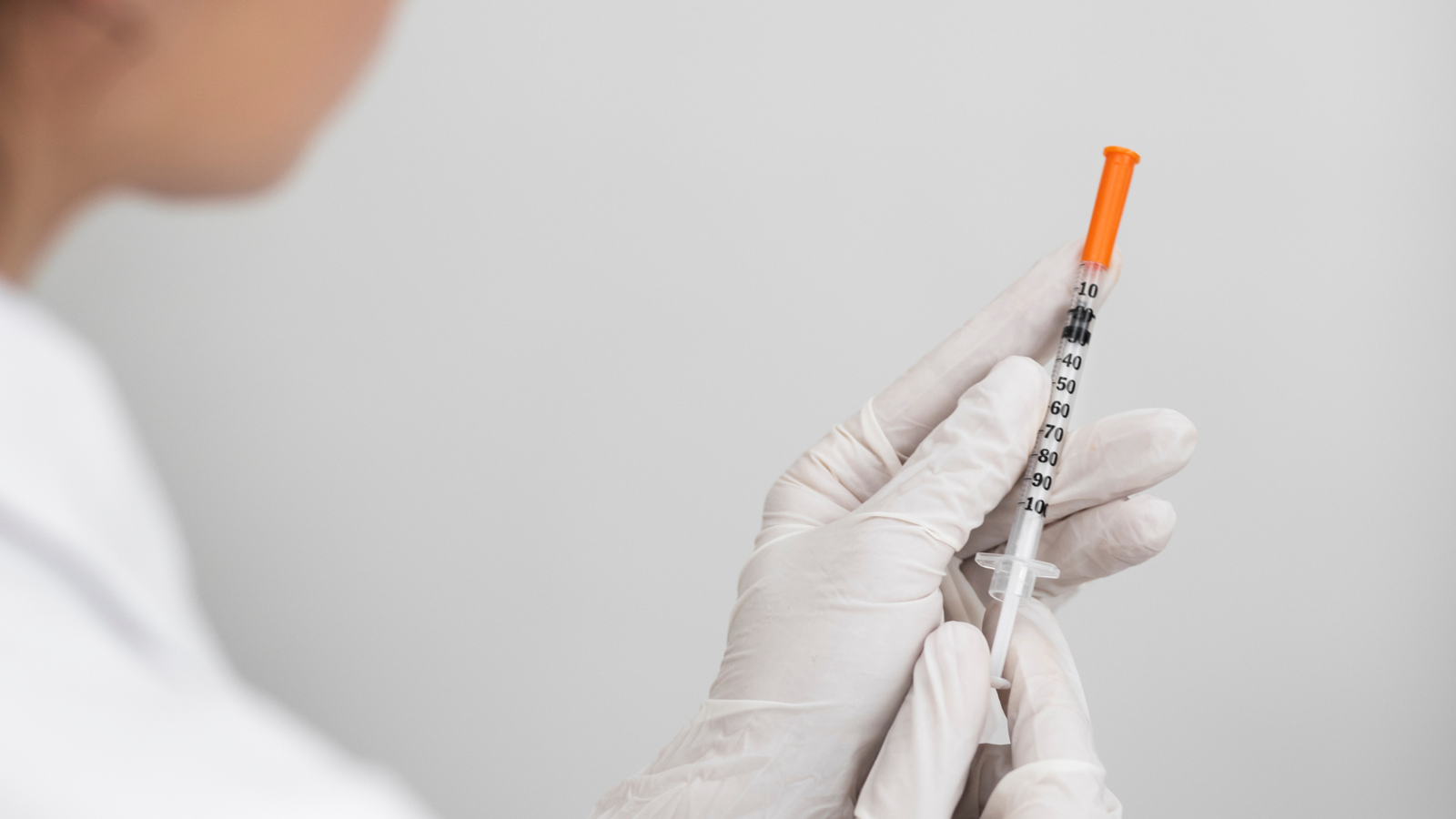
Insulin syringes (typically U-100, measured in IU) for drawing and administering doses
Larger draw syringe (1–3ml) for adding bacteriostatic water to the vial
Alcohol swabs for sterilizing the vial septum before each penetration
A clean, flat, well-lit workspace
Disposable gloves for sterile handling
Bacteriostatic water is the preferred diluent because it contains 0.9% benzyl alcohol, which acts as a preservative. This allows the reconstituted solution to remain stable in the refrigerator for up to 28 days after mixing — far longer than sterile water, which must be used within 24 hours. Never use tap water, saline intended for IV infusion, or any other liquid to reconstitute your semaglutide 10mg vial.
Step-by-Step Reconstitution Guide for the Semaglutide 10mg Vial
This is the most technically critical section. Follow each step in sequence without shortcuts.
Step 1 — Sterilize All Surfaces and Entry Points
Wipe the rubber septum of the semaglutide 10mg vial thoroughly with a fresh alcohol swab and allow it to air-dry for 15–20 seconds. Do the same for the bacteriostatic water vial. This step is non-negotiable for maintaining sterility.
Step 2 — Draw the Bacteriostatic Water
Using your draw syringe, pull the required volume of bacteriostatic water. The volume you choose directly determines your final concentration, which governs every dose measurement going forward. Below are the most commonly used dilution ratios for a semaglutide 10mg vial:
Bacteriostatic Water AddedFinal ConcentrationNotes1 mL10 mg/mLVery concentrated; small, precise volumes needed2 mL5 mg/mLWidely recommended; clean IU measurements3 mL3.33 mg/mLIdeal for lower doses; easiest to measure accurately4 mL2.5 mg/mLBest for starting titration phases5 mL2 mg/mLMaximum dilution; largest injection volume
We recommend adding 2–3 mL of bacteriostatic water as the optimal balance between measurement precision and injection volume comfort.
Step 3 — Inject the Water Slowly Against the Vial Wall
Insert the needle of the draw syringe through the septum at an angle so that the stream of bacteriostatic water runs slowly down the inside glass wall of the vial — not directly onto the powder. Injecting directly onto the lyophilized cake at force can cause mechanical degradation of the peptide structure.
Deliver the full volume gently and steadily over 10–15 seconds.
Step 4 — Do Not Shake. Gently Swirl.
This is perhaps the most commonly violated rule in peptide handling. Never shake the vial. Aggressive agitation creates air bubbles and can denature the semaglutide peptide chain, rendering the compound biologically inactive.
Instead, hold the vial between two fingers and gently roll and swirl it in slow circular motions for 30–60 seconds until the powder is fully dissolved into a clear, colorless solution. If any cloudiness or undissolved particles remain, continue gentle swirling. If the solution does not clear after several minutes, discard and do not use.
Step 5 — Inspect Before Storing
Once fully reconstituted, the semaglutide 10mg vial solution should be clear, colorless, and particle-free. Hold it up to a light source for a thorough visual check. Any cloudiness, visible particles, or unusual color is a disqualifying sign.
Semaglutide 10mg Dosing: A Comprehensive Guide
Dosing semaglutide 10mg correctly requires understanding both the concentration of your reconstituted solution and the measurement system of the syringe you are using.
Converting mg to IU on an Insulin Syringe
Insulin syringes measure in International Units (IU), not milligrams. This creates a conversion step that many users get wrong, leading to dosing errors. The formula is straightforward:
IU to draw = (Desired dose in mg ÷ Concentration in mg/mL) × 100
For example, using a 5 mg/mL concentration (2 mL of bacteriostatic water added to a 10mg vial):
0.25 mg dose = 5 IU on the syringe
0.5 mg dose = 10 IU on the syringe
1.0 mg dose = 20 IU on the syringe
1.7 mg dose = 34 IU on the syringe
2.4 mg dose = 48 IU on the syringe
Always double-check your calculation before drawing any dose. Labeling the vial with its concentration upon reconstitution is strongly advised.
Standard Dosing Escalation Schedule
A well-structured titration schedule minimizes gastrointestinal side effects and allows the body to adjust progressively. The following is a standard escalation framework for weekly subcutaneous administration:
WeekDoseWeeks 1–40.25 mg per weekWeeks 5–80.5 mg per weekWeeks 9–121.0 mg per weekWeeks 13–161.7 mg per weekWeek 17+2.4 mg per week (maintenance)
At a 5 mg/mL concentration, a single semaglutide 10mg vial will comfortably supply the full titration schedule above and several weeks of maintenance dosing. This is the primary reason the 10mg vial format is considered the most economical and practical choice for ongoing protocols.
Injection Site Guidance
Semaglutide 10mg is administered via subcutaneous injection, meaning into the fatty tissue layer directly beneath the skin. Common injection sites include:
Abdomen — at least 2 inches away from the navel
Upper thigh — outer front portion
Upper arm — outer area with sufficient subcutaneous fat
Rotate injection sites with each weekly dose to prevent lipodystrophy (localized fat tissue changes) at any single location. Inject at a 90-degree angle for most individuals; a 45-degree angle is appropriate for those with very little subcutaneous fat.
How to Store a Semaglutide 10mg Vial Correctly
Storage is where the majority of peptide degradation occurs if handled improperly. The following protocols apply to both the pre- and post-reconstitution states.
Pre-Reconstitution Storage (Lyophilized Powder)
An unopened semaglutide 10mg vial in lyophilized form should be stored:
Temperature: 2°C to 8°C (36°F to 46°F) — standard refrigerator temperature
Light exposure: Protected from direct light; store in original packaging or a dark container
Humidity: Low-humidity environment; do not store near the refrigerator door where temperature fluctuates
Freezing: Avoid freezing the lyophilized powder; freeze-thaw cycling can damage the vial seal and degrade the compound
Under these conditions, most lyophilized semaglutide 10mg preparations remain stable for 12–24 months from the date of manufacture.
Post-Reconstitution Storage
Once the semaglutide 10mg vial has been reconstituted with bacteriostatic water, the storage window shortens significantly:
Temperature: Maintain at 2°C to 8°C at all times
Duration: Use within 28 days of reconstitution when bacteriostatic water is used
Light: Keep away from light; a dedicated opaque drawer or covered tray inside the refrigerator is ideal
Agitation: Do not shake at any point; transport carefully to avoid mechanical disruption
Label every vial with the reconstitution date, the concentration, and the expiry date (28 days forward). This simple habit prevents dosing with degraded solution and eliminates calculation errors.
Signs That a Reconstituted Vial Has Degraded
Discard any reconstituted semaglutide 10mg solution that shows:
Cloudiness or turbidity when it was previously clear
Visible floating particles or sediment
Yellow, brown, or pink discoloration
Unusual odor upon drawing
Any vial that has been stored beyond 28 days
Common Mistakes to Avoid With a Semaglutide 10mg Vial
Even experienced users make preventable errors. We outline the most consequential ones below:
Mistake 1 — Using the wrong diluent. Only bacteriostatic water should be used. Sterile water has no preservative and dramatically shortens usable life. Saline solution is not appropriate for peptide reconstitution.
Mistake 2 — Shaking the vial. Mechanical agitation denatures the peptide. Always swirl gently.
Mistake 3 — Incorrect concentration calculation. Every dosing error begins with a miscalculated concentration. Always verify your math using the volume-to-concentration formula before administering a single dose.
Mistake 4 — Storing at room temperature. Even short periods of room-temperature exposure accelerate peptide degradation in the reconstituted form. Return the vial to the refrigerator immediately after each draw.
Mistake 5 — Re-entering the vial without sterilization. Swab the septum with fresh alcohol before every needle penetration, even if the vial was just used.
Mistake 6 — Not labeling the vial. Unlabeled vials create dangerous ambiguity. Date, concentration, and expiry should be written on every vial at the moment of reconstitution.
How Many Doses Does a Semaglutide 10mg Vial Provide?
This depends entirely on your reconstitution volume and your weekly dose. Here is a practical reference table based on a 3 mL dilution (3.33 mg/mL):
Weekly DoseDoses Per VialApproximate Duration0.25 mg40 doses~40 weeks0.5 mg20 doses~20 weeks1.0 mg10 doses~10 weeks1.7 mg~6 doses~6 weeks2.4 mg~4 doses~4 weeks
The semaglutide 10mg vial is the clear leader in value-per-dose across all vial sizes, making it the preferred format for extended protocols where consistency and cost efficiency both matter.
Frequently Asked Questions About Semaglutide 10mg
Can semaglutide 10mg be frozen after reconstitution?
No. Freezing a reconstituted solution causes ice crystal formation that disrupts the peptide chain. Always store between 2°C and 8°C and never allow it to freeze.
What happens if I inject cloudy semaglutide?
A cloudy solution indicates degradation, contamination, or incomplete dissolution. Injecting degraded peptide provides no therapeutic or research benefit and introduces unnecessary risk. Discard immediately.
Can the 10mg vial be split between multiple patients or uses?
The semaglutide 10mg vial is a multi-dose vial when reconstituted with bacteriostatic water. It can be used across multiple draw events within the 28-day window. Strict sterile technique must be maintained at every draw.
Is the 10mg vial better than the 5mg for ongoing use?
For protocols lasting more than four weeks, the semaglutide 10mg vial provides significantly better cost efficiency and fewer reconstitution events, reducing the risk of contamination over time.
Final Thoughts on Working With Semaglutide 10mg
The semaglutide 10mg vial is the most versatile, economical, and research-friendly format available for this peptide. When handled with the precision and care described in this guide — proper reconstitution technique, accurate dose conversion, strict sterile practice, and refrigerated storage within a 28-day window — it performs with consistency and reliability across extended use timelines.
Every step in this process compounds on the last. A correctly reconstituted vial that is improperly stored loses its value just as surely as a perfectly stored vial that is incorrectly dosed. Approach each element of the process with the same level of rigor, and your semaglutide 10mg protocol will deliver the precision and repeatability that serious research demands.





Write a comment ...